Create a Clear Life Vision: Values, Habits & Weekly Plan

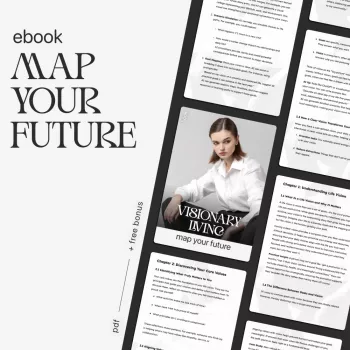
Visionary Living: Map Your Future — A Practical Guide to Creating a Clear Life Vision
A compelling life vision brings focus to daily choices, especially during career changes, personal reinvention, or periods of uncertainty. The goal isn’t to “figure out your whole life” in one sitting—it’s to clarify what matters, translate it into priorities, and build a realistic plan that stays flexible as life changes.
What a Life Vision Is (and What It Isn’t)
A life vision is a direction-setting picture of the kind of life you’re building. It’s a compass, not a prophecy. The point is to reduce noise and make decisions with more confidence—even when the next step isn’t perfectly obvious.
Vision vs. goals
Your vision gives meaning (“I want a life that feels calm, capable, and connected”). Goals provide measurable steps (“Save $5,000,” “Run a 10K,” “Finish a certificate”). When goals change (and they will), the vision keeps your choices coherent.
Common myths that keep people stuck
- Myth: You need perfect clarity first. Clarity usually comes from action, reflection, and feedback—not waiting.
- Myth: There’s only one ‘true purpose’. Most people have multiple valid paths that can express the same values.
- Myth: Motivation must arrive before you start. Consistency is more reliable when it’s built on systems and environment design.
When your vision is clear enough, it supports boundaries (“no” becomes easier), reduces second-guessing, and keeps progress steady through busy seasons. For more on how purpose supports motivation and well-being, see the American Psychological Association’s overview on purpose.
Start With Values: The Non‑Negotiables That Shape Your Future
Values-based planning reduces regret because it aligns daily trade-offs with what you care about most. When plans fail, it’s often because they’re built on someone else’s priorities—or on short-term urgency instead of long-term meaning.
Quick exercises to identify values
- “Best day” reflection: Describe a genuinely good day from the last year. What was present—freedom, belonging, mastery, calm, novelty?
- Peak moments: Recall moments you felt proud or deeply satisfied. What value was being expressed (growth, courage, service, creativity)?
- Recurring frustrations: Patterns of irritation often point to a violated value (e.g., constant rushing may signal a need for spaciousness or autonomy).
Rank values using real trade-offs
Pick your top 8–10 values, then narrow to 4–6 by testing them against trade-offs in time, money, and relationships. If two values conflict, ask which one you’d protect in a hard season.
Turn abstract values into behaviors
| Value | What it looks like in daily life | Simple weekly commitment |
|---|---|---|
| Growth | Learning and skill-building are scheduled | 1 hour of study or practice, 3x/week |
| Freedom | Time and finances are planned to protect flexibility | One “unscheduled” block each week |
| Connection | Relationships are maintained intentionally | Two meaningful check-ins per week |
| Well-being | Recovery and basics are protected | 7–8 hours sleep goal + 2 movement sessions |
Design Your Vision Across Key Life Areas
Define “enough” to reduce endless comparison
Create a future snapshot
Name constraints upfront
Turn the Vision Into a Map: Milestones, Habits, and Next Steps
Choose 1–3 keystone habits
Keystone habits make other progress easier. Strong candidates: a consistent sleep routine, a weekly planning ritual, movement, and protected deep-work blocks. Research on habit formation suggests consistency matters more than intensity at the start; see University College London’s summary of habit formation findings here.
| Timeframe | Focus | Outcome | Examples of actions |
|---|---|---|---|
| 12 months | Milestones | Major results that confirm direction | Earn a credential; relocate; build emergency fund |
| 90 days | Priorities | A small set of measurable wins | Finish a course; ship a portfolio; pay down one debt |
| Weekly | Consistency | Progress through repeatable actions | 3 workouts; 2 networking messages; 2 deep-work blocks |
| Daily | Execution | Minimal actions that keep momentum | 15 minutes reading; plan tomorrow; 10-minute walk |
Use a decision filter
For practical goal-setting and follow-through insights, Harvard Business Review’s resources on goal-setting can help you pressure-test priorities and execution.
Overcome the Most Common Roadblocks
A Digital Guide That Walks the Process Step by Step
If you prefer structure, a workbook-style guide can keep you moving when reflection feels slippery. Visionary Living: Map Your Future (Digital eBook) is designed around clear prompts, space to write, and planning templates that translate insight into action.
Small upgrades to your setup can also support consistency. If you’re creating a calmer planning space at home, the Plush Geometric Area Rug can help define a comfortable corner for journaling, reading, or weekly reviews. If you think out loud or like recording reflections, a USB Gaming Microphone with RGB, Mute Button & Gain Control for PC/PS5/PS4 can make voice notes and guided planning sessions feel more natural.
Make It Stick: A Simple Weekly Review Ritual
| Question | Why it matters |
|---|---|
| What moved forward this week? | Builds momentum and clarity |
| What created friction or avoidance? | Reveals hidden barriers |
| What is the single most important outcome next week? | Protects focus |
| What needs to be removed, delegated, or delayed? | Reduces overload |
FAQ
How long does it take to create a clear vision for your life?
A workable first draft often takes a few focused sessions over a week. A clearer, more confident version usually emerges over several weeks as you reflect, take small experiments, and adjust based on what you learn.
What if goals change after starting the plan?
Change is expected. Keep your values steady, revisit your milestones, and update the next 90-day plan so your actions match your current priorities and real-world constraints.
How can a life vision stay realistic without feeling limiting?
Define your constraints upfront, choose flexible milestones, and focus on habits and systems that work across multiple future paths. This keeps the vision grounded while leaving room for opportunities and growth.











Leave a comment