Cordless Clipper & Trimmer Kit for Clean Fades at Home
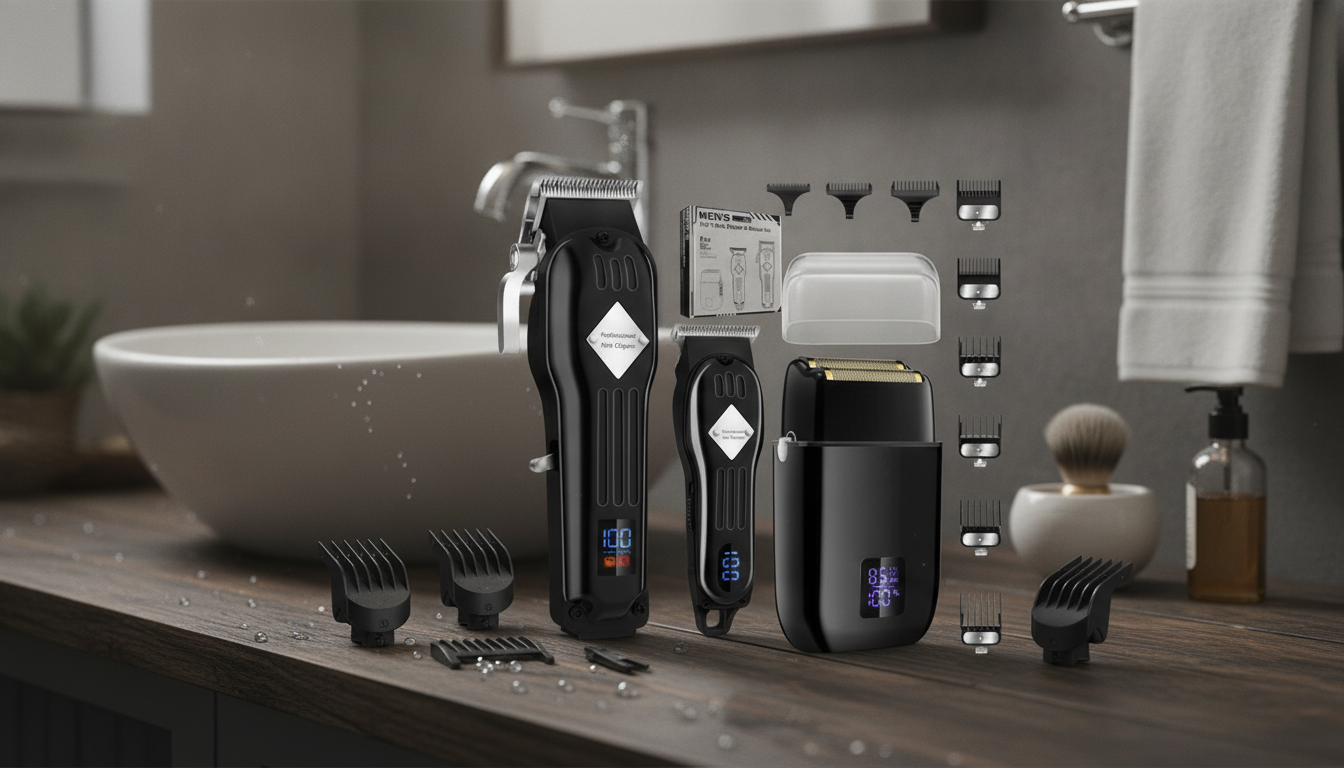
Professional Cordless Hair Clippers and Beard Trimmer Kit: Clean Fades, Sharp Lines, and Even Beard Blends
A cordless clipper-and-trimmer kit can cover full haircuts, detail work, and beard shaping with fewer tools on the counter. The difference between a “good enough” trim and a consistently clean result usually comes down to the basics: steady power delivery, blade behavior on different hair types, comfort and control in-hand, reliable length settings, and a simple maintenance routine that keeps cutting smooth while helping reduce irritation. For more guidance, see Cuts for a Cause – Wahl.
What a clipper-and-trimmer kit is built to do
A matched kit typically includes a full-size clipper for fast, even removal and blending, plus a smaller trimmer for tight detailing and crisp outlines. For further reading, see Best Beard Trimmer for You – Consumer Reports.
- Hair clippers: bulk removal and blending on the scalp using guards and taper/lever control.
- Beard trimmer: closer detailing for moustache lines, cheeks, neckline, and precision edges.
- Why a matched kit helps: consistent feel, compatible charging habits, and predictable cutting performance across tasks.
- Best use cases: home haircuts, quick touch-ups between barbershop visits, travel grooming, and self-maintenance for short styles.
Kit at a glance: features that affect real-world results
Specs are useful, but what matters most is how the tool behaves when it meets real hair: thick sections, swirls at the crown, coarse beard growth, and sensitive neck skin.
- Cordless performance: stable power delivery matters more than maximum advertised RPM—especially mid-cut.
- Blade type and sharpness: impacts tugging, line crispness, and comfort in sensitive areas.
- Ergonomics: balanced weight and a secure grip reduce slips during fades and edging.
- Length control: quality guards plus a reliable taper lever make blends easier and more repeatable.
- Noise and heat: cooler, quieter tools are simply easier to use for longer sessions.
Feature checklist for confident at-home cuts
| Feature | Why it matters | What to look for |
|---|---|---|
| Cordless battery | Prevents power drops mid-cut and reduces cord snagging | Consistent output, clear battery indicator, reasonable recharge time |
| Adjustable taper/lever (clipper) | Creates smoother transitions without swapping guards constantly | Lever positions that feel distinct and don’t drift while cutting |
| Precision trimmer head | Defines hairline, beard outline, and neckline cleanly | Narrow head for corners and a blade that doesn’t bite |
| Guard set quality | Controls length accurately and avoids uneven patches | Sturdy clips, labeled sizes, minimal flex |
| Easy cleaning access | Reduces clogging and prolongs blade sharpness | Removable head or easy brush-out path; oiling points are reachable |
How to get a clean fade and even blend with fewer passes
Fades don’t have to be complicated; they just need a repeatable system. The goal is to set a baseline length, then soften the transition in controlled steps.
Beard shaping that looks sharp without over-trimming
- Define the neckline first: set a natural curve (commonly above the Adam’s apple). Check symmetry straight-on and in profile before you go higher.
- Cheek line: follow your natural growth and remove strays gradually instead of carving a new line in one pass.
- Blend sideburns into the haircut: use the trimmer for edges, then switch to the clipper with a short guard to soften the transition.
- Even density trick: trim with the grain to control bulk, then lightly against the grain only for final refinement if your skin tolerates it. For bump-prone areas, the American Academy of Dermatology’s guidance on preventing razor bumps can help reduce irritation patterns over time: AAD razor bumps tips.
Battery, charging, and travel-friendly habits
Cleaning and maintenance for smooth cutting and longer blade life
- After each use: brush out hair from blade teeth and the housing to prevent snagging and uneven cutting.
- Oiling: add a small drop across the blade teeth, then run the tool briefly to distribute and reduce friction.
- Sanitizing: follow manufacturer guidance and allow full dry-down. For general best practices on cleaning/disinfecting, see the CDC’s overview: CDC cleaning and disinfecting guidance.
- When to service: increased pulling, louder operation, excessive heat, or uneven lines even with good technique can signal it’s time to clean deeper, replace blades, or tune the tool.
Common mistakes that cause patches, lines, and irritation
Product options
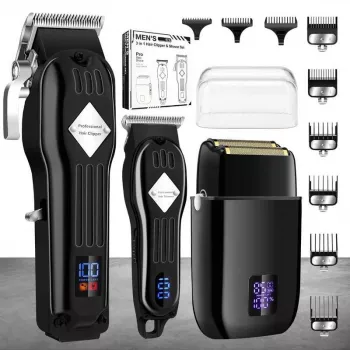
- Professional Cordless Hair Clippers and Beard Trimmer Kit: built to cover full haircuts plus detailing so one set can handle bulk removal, blending, and line work. Best for frequent touch-ups, short-to-medium styles, and keeping a consistent look between appointments.
- USB Gaming Microphone with RGB, Mute Button & Gain Control for PC/PS5/PS4: a practical add-on if you’re doing on-camera calls or streaming and want your audio to match a clean, well-groomed appearance.
FAQ
Can the same kit handle both head hair and beard grooming?
Yes. Use the clipper with guards and the taper/lever for bulk removal and blending on the head, and use the trimmer for tighter edging and beard outlining. Clean and sanitize between areas to keep the tools hygienic and cutting smoothly.
How often should blades be oiled and cleaned?
Brush out hair after every use, and apply a light oiling as directed—commonly each session or any time you notice extra heat or noise. For sanitizing, follow the manufacturer’s instructions and let everything fully dry before storage.
What causes clippers to pull hair instead of cutting smoothly?
Pulling is usually caused by clogged blades, lack of oil, dull blade edges, or moving too fast through dense hair. Brush out the blade path, oil lightly, slow your passes, and if tugging persists, inspect for blade wear or misalignment.








Leave a comment