Wooden Play Kitchen Set: Accessories for Pretend Cooking
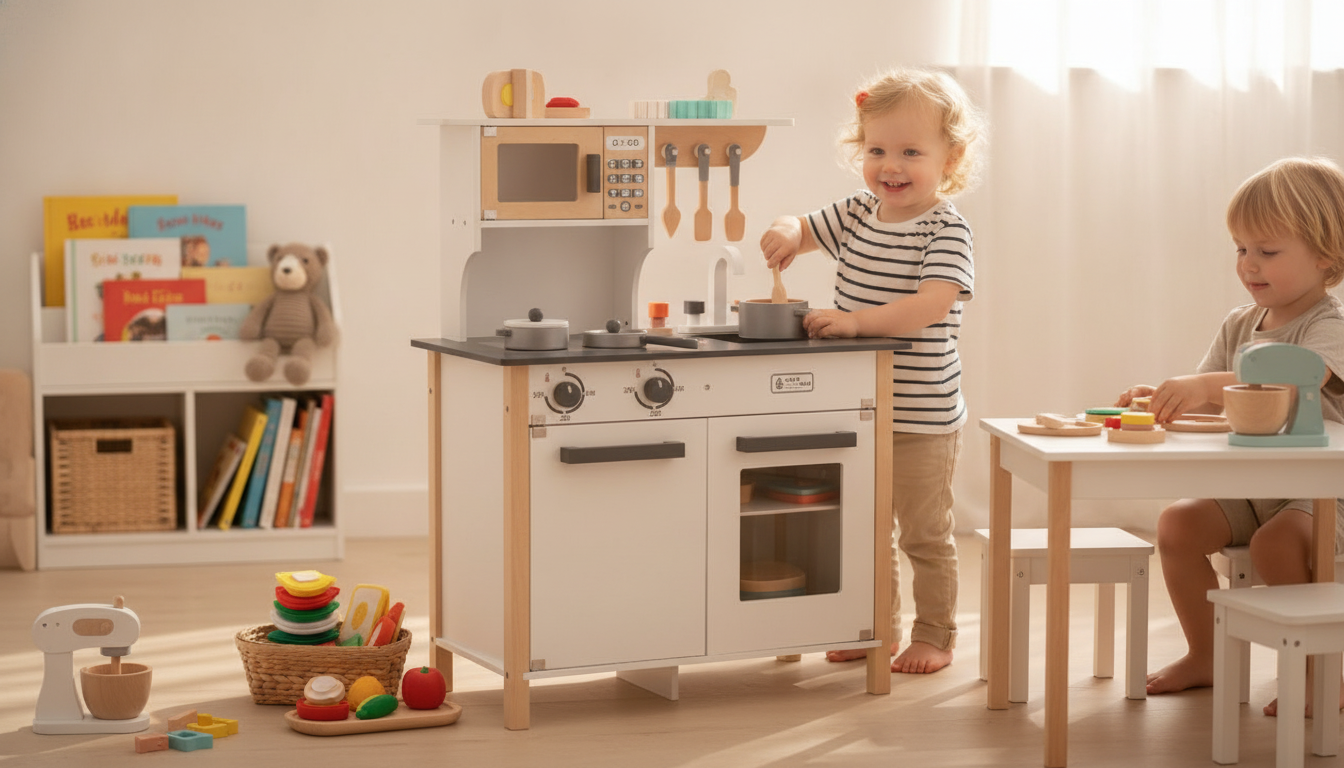
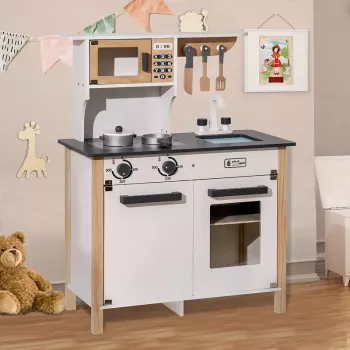
Wooden Kids Play Kitchen Set with Accessories for Pretend Play
A wooden play kitchen turns everyday routines—cooking, cleaning, serving—into hands-on pretend play that builds confidence, language skills, and social cooperation. With sturdy wood construction and a variety of accessories, this kind of set encourages kids to role-play real kitchen tasks while keeping playtime screen-free and imaginative. If you’re setting up a cozy corner in a playroom or living area, the Wooden Kids Play Kitchen Set with Accessories for Pretend Play creates an inviting “home base” for daily play.
What Makes a Wooden Play Kitchen So Engaging
Pretend kitchens work because they’re naturally open-ended. Instead of one “right” way to play, kids can switch roles and storylines every time they walk up to the set.
- Open-ended play: Kids can cook, host, grocery shop, and “run a restaurant” without fixed rules.
- Richer communication: Role-play encourages storytelling, turn-taking, and new vocabulary (“boil,” “stir,” “serve,” “order”).
- Hands-on learning: Accessories help children practice sorting, matching, and sequencing steps (prep → cook → serve → clean).
- Stable, furniture-like feel: Wooden construction often feels more solid for energetic play than lightweight plastic sets.
What’s Included and How Kids Use It
A well-designed play kitchen is more than a cute prop—it’s a repeatable routine station kids can return to each day. The structure gives children a familiar “place” to act out meals and chores they see at home.
- Kitchen play structure: Designed for pretend cooking and everyday routines like prepping, cooking, and washing up.
- Accessory set: Supports common scenarios like breakfast prep, snack time, and serving guests.
- Works for solo or group play: Kids can practice independent routines alone, or share tools, assign roles, and take “orders” together.
- Encourages cleanup habits: When accessories have a consistent place to return after play, kids get practice resetting the space.
For a play area that feels finished (and helps dampen noise from busy little feet), pairing a kitchen corner with a soft floor layer like the Plush Geometric Area Rug can make the space more comfortable for longer play sessions.
Skill Building Through Pretend Cooking
Pretend play is often where kids rehearse real-world skills in a low-pressure way. A play kitchen supports “practice runs” of daily routines—without heat, sharp tools, or time pressure.
- Language development: Naming foods, describing flavors and textures, and narrating steps (“first we wash,” “then we chop,” “now we serve”).
- Social-emotional learning: Empathy and cooperation grow when kids “cook for” siblings, friends, or caregivers and respond to requests.
- Fine motor practice: Grasping, placing, stacking, arranging, opening/closing doors, and turning knobs builds control and coordination.
- Early math concepts: Counting items, comparing sizes, organizing sets, and making “two plates” or “three cups” reinforces number sense.
- Confidence and independence: Repeating familiar routines in a kid-sized environment helps children feel capable and in charge.
Choosing the Right Play Kitchen for Your Space
Before you set up a new play kitchen, a little planning makes daily use easier—especially if it will live in a shared family area.
- Measure the play area first: Leave room for kids to stand, open doors, and move safely around the set.
- Consider who will play: Toddlers often do best with simpler, sturdier interactions; older kids enjoy more role-play variety and longer storylines.
- Look for a stable base: Heavier wooden sets can reduce tipping risk when kids lean in during play.
- Plan accessory storage: Bins, shelves, or baskets help keep small items together and reduce clutter between sessions.
- Sound and moving parts: Decide whether clicks/knobs/doors are a plus for realism or a distraction in quieter homes.
For general guidance on safe toy use and age-appropriate play, review trusted resources like the American Academy of Pediatrics toy safety tips and the U.S. Consumer Product Safety Commission toy safety information.
Quick Comparison: Wooden vs. Plastic Play Kitchens
If you’re deciding between materials, focus on how the set will be used day-to-day: how often it will be moved, how active the play tends to be, and how you want it to look in your home.
| Feature | Wooden play kitchen | Plastic play kitchen |
|---|---|---|
| Stability | Often heavier and sturdier for active play | Usually lighter and easier to move |
| Durability | Can handle years of use; may show natural wear | Resists some scuffs; parts can crack with rough play |
| Look and feel | Classic, furniture-like appearance | Bright colors and themed designs are common |
| Noise level | Typically quieter (fewer hollow sounds) | May be louder depending on construction |
| Care | Wipe clean; avoid soaking wood | Wipe clean; generally more water-tolerant |
Safety and Care Tips for Wooden Play Sets
Wooden play kitchens are designed for pretend play, but like any kids’ product, they benefit from simple ongoing checks and tidy storage.
Play Ideas to Keep It Fresh
FAQ
What age is a wooden play kitchen set best for?
Many kids enjoy a play kitchen from toddlerhood through early elementary years, with role-play becoming more detailed as they grow. Always check the product’s age guidance, and supervise toddlers if the set includes smaller accessories.
How do wooden play kitchens help child development?
They support language growth through naming foods and narrating steps, and social skills through taking turns and cooperating in shared play. Kids also practice fine motor control and early math concepts like counting, sorting, and comparing sizes.
How should a wooden play kitchen be cleaned and maintained?
Wipe surfaces with a damp cloth and mild soap, then dry promptly to protect the finish. Inspect periodically for loose parts or rough spots, and store accessories in a consistent container so pieces don’t become hazards or get lost.









Leave a comment