Ask With Ease: Confident Help Requests Without Awkwardness
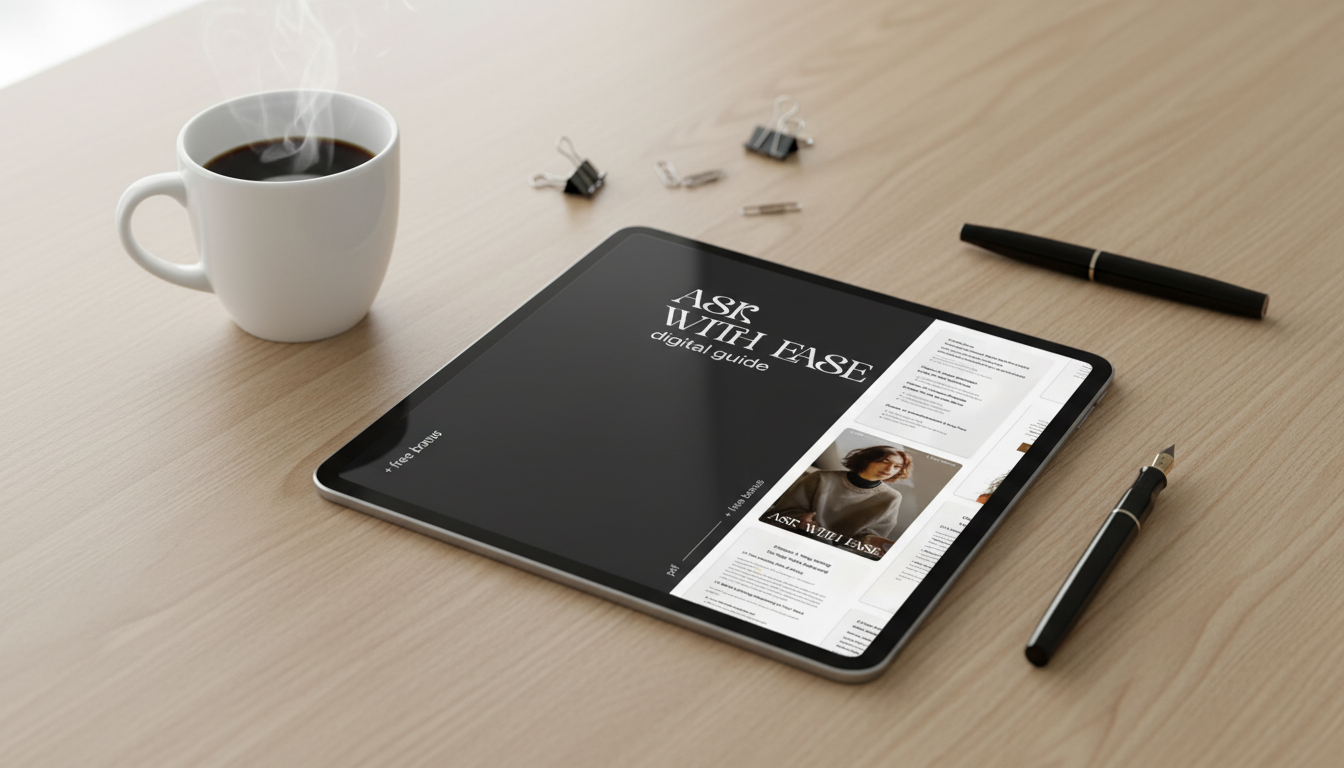
Ask With Ease: A Practical Digital Guide to Asking for Help Without Feeling Awkward
Asking for help can feel surprisingly vulnerable—even when the request is reasonable. The “Ask With Ease” approach is built for everyday moments: at work, at home, in friendships, and during personal growth. The goal is simple: communicate clearly, confidently, and with boundaries so support feels easier to request and easier for others to give.
Healthy support is also strongly connected to stress management and overall well-being, including how people cope under pressure and recover after hard seasons. For additional, research-informed perspectives on stress and social support, see resources from the American Psychological Association (APA) and the National Institutes of Health (NIH) via MedlinePlus.
Why asking for help feels awkward (and why that’s normal)
Awkwardness often shows up not because the request is wrong, but because it matters. Many people hesitate due to fear, uncertainty, or old patterns that once felt protective.
- Fear of being judged: worries about looking unprepared, needy, or incompetent can keep requests locked inside.
- Unclear expectations: when the request is vague, it’s harder to ask and harder for the other person to respond.
- Past experiences: being dismissed once can create a habit of handling everything alone.
- People-pleasing patterns: discomfort with “taking up space” can turn simple needs into guilt.
- Good news: awkwardness usually signals that something matters—clarity and a simple structure reduce it fast.
What “Ask With Ease” helps you build
Clear requests aren’t about being demanding. They’re about respecting time, energy, and capacity—yours and the other person’s.
- A repeatable way to ask that’s concise and calm, even when emotions run high.
- Confidence to request support without overexplaining or apologizing excessively.
- Boundary-friendly phrasing that respects both people’s time and capacity.
- Better timing and delivery—knowing when to ask, who to ask, and how to make it easy to say yes or no.
- A shift from “I’m a burden” to “I’m making a clear request,” which improves relationships and self-trust.
A simple 5-step framework for confident requests
This structure keeps you grounded and makes your request easier to answer.
- Name the need: state what support is needed in one sentence (avoid long backstories upfront).
- Give context (briefly): add only the information required to understand the request.
- Make it specific: include what “help” looks like—time, task, decision, feedback, or presence.
- Offer options: provide two choices or a flexible range (example: “today or tomorrow,” “10 minutes or a quick message”).
- Leave room for a no: invite honesty—this reduces pressure and increases trust, even if the answer is “not now.”
Help requests by situation: what to say and what to avoid
| Situation | Clear ask | Avoid |
|---|---|---|
| Work | “Can you review this draft and flag any unclear sections? 15 minutes today or tomorrow.” | “Do you have a minute?” (then dropping a big task) |
| Friendship | “Could you talk for 10 minutes tonight? I’m feeling overwhelmed and could use a listening ear.” | “Never mind, it’s stupid.” |
| Family/household | “Can you handle dishes tonight? I’ll do them tomorrow—just need a break.” | “You never help around here.” |
| Learning something new | “Can you show me how you did that step? I want to learn the method.” | “I’m terrible at this—just do it for me.” |
Ready-to-use scripts for everyday support
When words feel hard to find, simple scripts reduce the emotional load. Try these and tailor them to your tone.
- Low-stakes ask: “Could you point me to the right place to start?”
- Time-bound ask: “Do you have 5 minutes for a quick question?” (and keep it to 5 minutes).
- Clarifying ask: “Can you tell me what success looks like for this task?”
- Emotional support ask: “I don’t need solutions—just someone to listen for a few minutes.”
- Boundary-respecting ask: “If now isn’t a good time, what would work better?”
- Follow-up if you feel guilty: “Thanks for considering it. Either way, I appreciate your honesty.”
How to ask without over-apologizing or overexplaining
Over-apologizing usually means you’re trying to soften the request to feel safer. A better path is respectful directness.
If you’d like additional skill-building around assertive communication, practical exercises from MindTools can complement a daily practice routine.
A 7-day practice plan to make asking feel natural
Who this digital guide is for
Product details at a glance
Recommended in-stock picks (quick links)
- Ask With Ease – Digital Guide for Confident Communication | How to Ask for Help Without Feeling Awkward | Self-Growth eBook for Everyday Support
- Decoding Car Repair Estimates – Practical eBook Guide for Smart Drivers | Learn how to understand a car repair estimate & Avoid Costly Mistakes
- USB Gaming Microphone with RGB, Mute Button & Gain Control for PC/PS5/PS4
How to get the most value from it
FAQ
What if someone says no when help is requested?
A calm response protects the relationship and your self-trust: “Thanks for letting me know—no worries.” If it makes sense, ask for an alternative time (“Is there a better time this week?”) or shift to another option without self-criticism (“Got it, I’ll reach out elsewhere”).
How can help be requested at work without sounding incompetent?
Be specific, time-bound, and quality-focused: “Can you sanity-check this section for clarity? Ten minutes today or tomorrow.” Framing the ask as alignment and accuracy signals professionalism, not weakness.
How can over-apologizing be stopped when asking for support?
Replace repeated apologies with one respectful opener and a clear request: “I appreciate your time—could you help me with X?” Keep context to 1–2 sentences, skip self-criticism, and end with an easy out (“If now isn’t good, what works better?”).










Leave a comment