Best Self-Cleaning Cat Brush: What to Look For
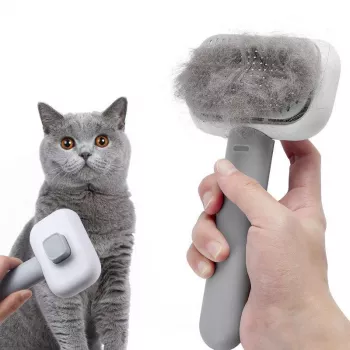
What is the best self-cleaning brush for cats?
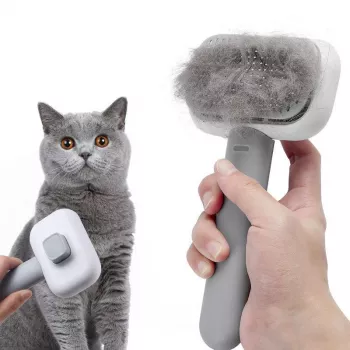
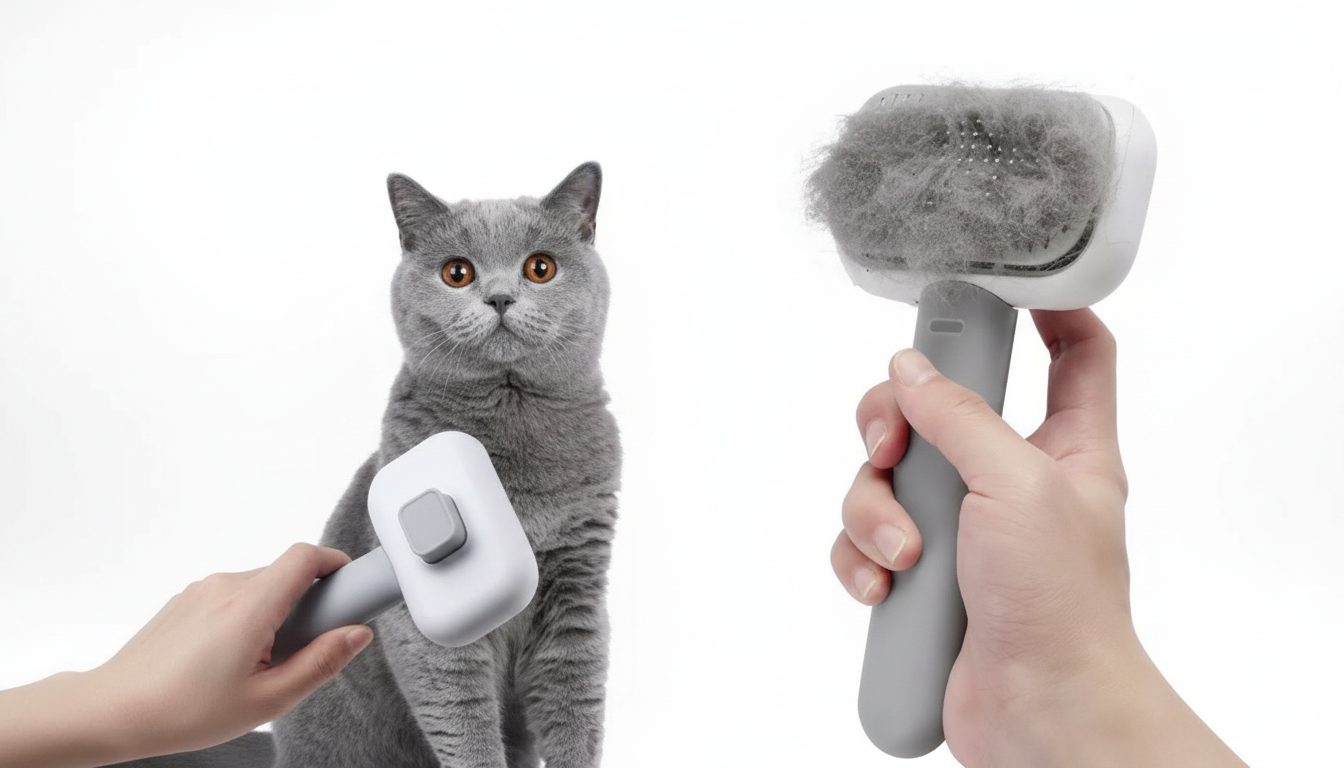
The best self-cleaning brush for cats is one that removes loose undercoat efficiently, releases collected fur with a single button press, and stays gentle on sensitive skin. For most cats, a self-cleaning slicker brush with fine, angled stainless-steel pins and a cushioned base offers the best balance of de-shedding power and comfort.
What to look for in a top self-cleaning cat brush
Pin design: Choose thin, slightly bent pins to catch shed fur without scraping. Rounded pin tips help prevent irritation, especially for short sessions on sensitive areas like the belly and legs.
Easy-release mechanism: A reliable push-button plate that lifts hair off the pins makes cleanup fast and keeps you brushing longer (which usually means better results and fewer hairballs).
Comfort and control: A non-slip handle and a head size that fits your cat’s body make brushing safer and quicker. Smaller heads are easier around the face and armpits; wider heads speed up brushing on the back and sides.
Coat match: For heavy shedders and double-coated cats, a slicker-style self-cleaning brush typically works best. For very short, sleek coats, use a lighter touch and shorter strokes to avoid overbrushing.
How to use a self-cleaning brush for the best results
Brush in the direction of hair growth using gentle, short strokes. Start with 2–5 minutes and build up as your cat relaxes. Press the self-clean button frequently so the pins keep grabbing loose fur instead of pushing it around. If your cat’s coat mats easily, avoid yanking—work slowly and consider pairing brushing with a detangling comb.
Want a quick buying checklist?
For a fast comparison of brush types, features to prioritize, and at-home de-shedding tips, visit the full guide here: self-cleaning pet brush guide.
FAQ
How often should you brush a cat to reduce shedding?
Most cats do well with brushing 2–3 times per week, while heavy shedders may benefit from brief daily sessions. Increase frequency during seasonal shedding to keep loose fur from building up.









Leave a comment